Maths
One more, one less (to 20)
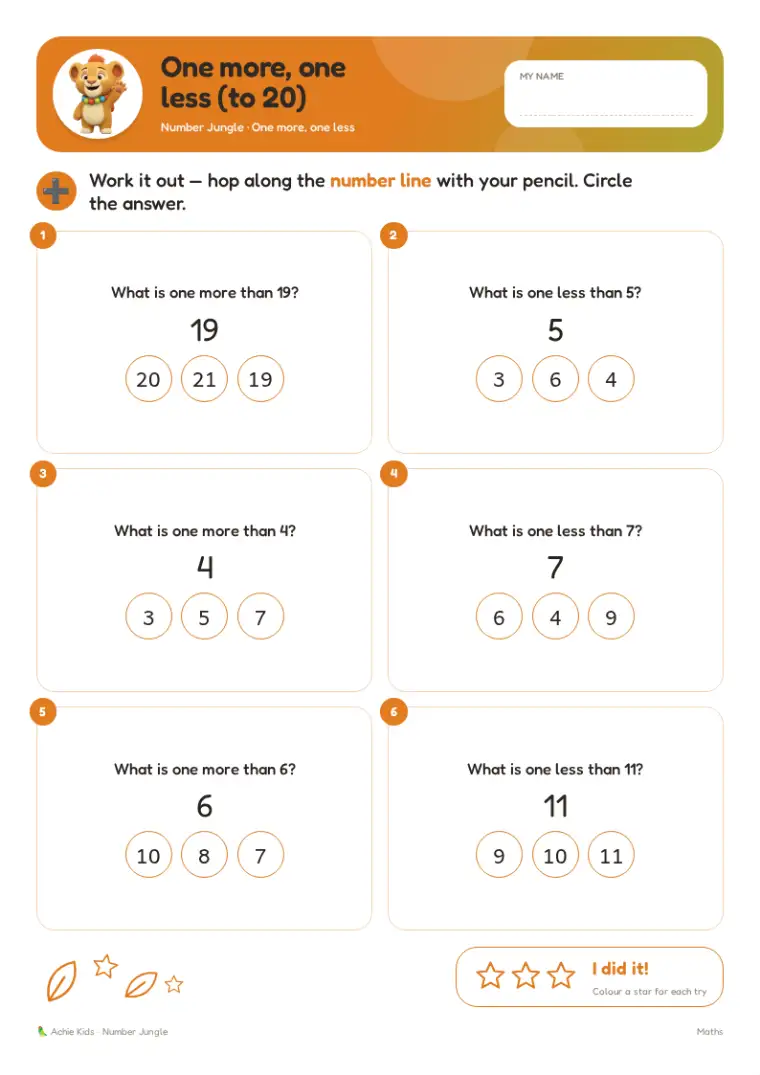
Six questions like “What is one more than 19?” and “What is one less than 5?” with numbers to 20. Finding one more and one less is the start of adding and taking away.
Ages 5–6 · 2 pages · colour + ink-saver
 Preview
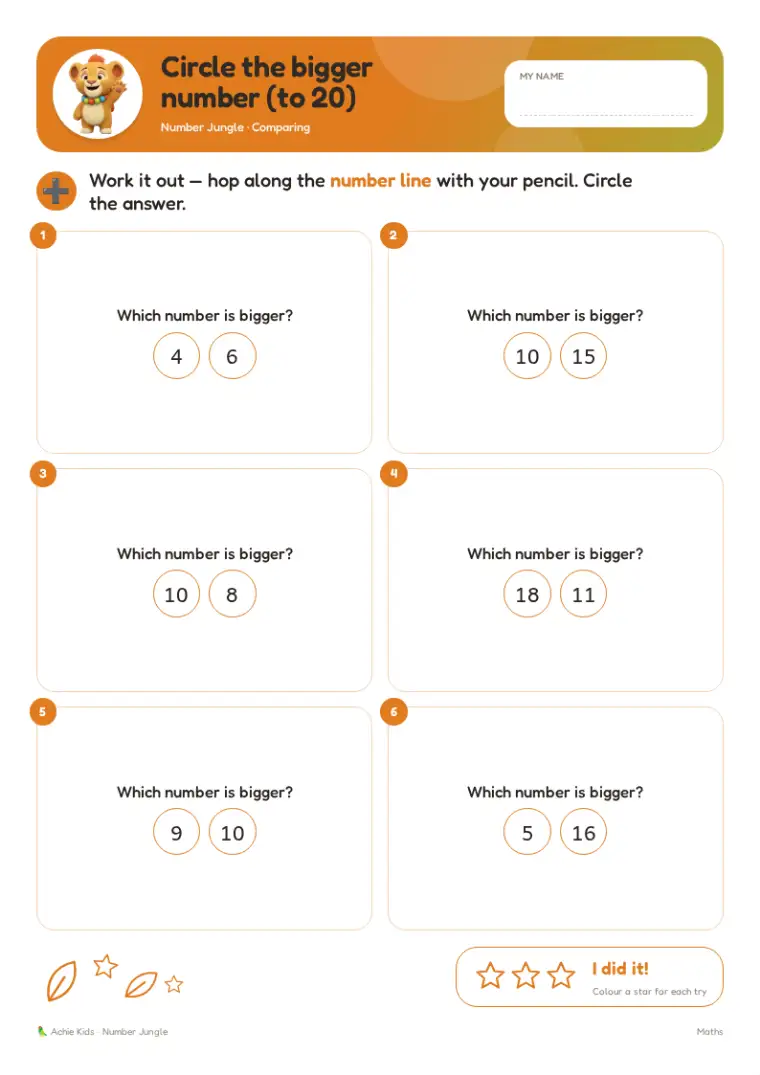
Six pairs of numbers up to 20: circle the bigger number in each pair. Saying “6 is bigger than 4” out loud helps it stick.
Free with Family
This sheet is part of the full bank: every worksheet, with your child’s nickname on the page if you like. Family, Founding Family and school plans include it.
National Curriculum (England)
Year 1 Mathematics: Number and place value
Maths
Six questions like “What is one more than 19?” and “What is one less than 5?” with numbers to 20. Finding one more and one less is the start of adding and taking away.
Ages 5–6 · 2 pages · colour + ink-saver
Maths
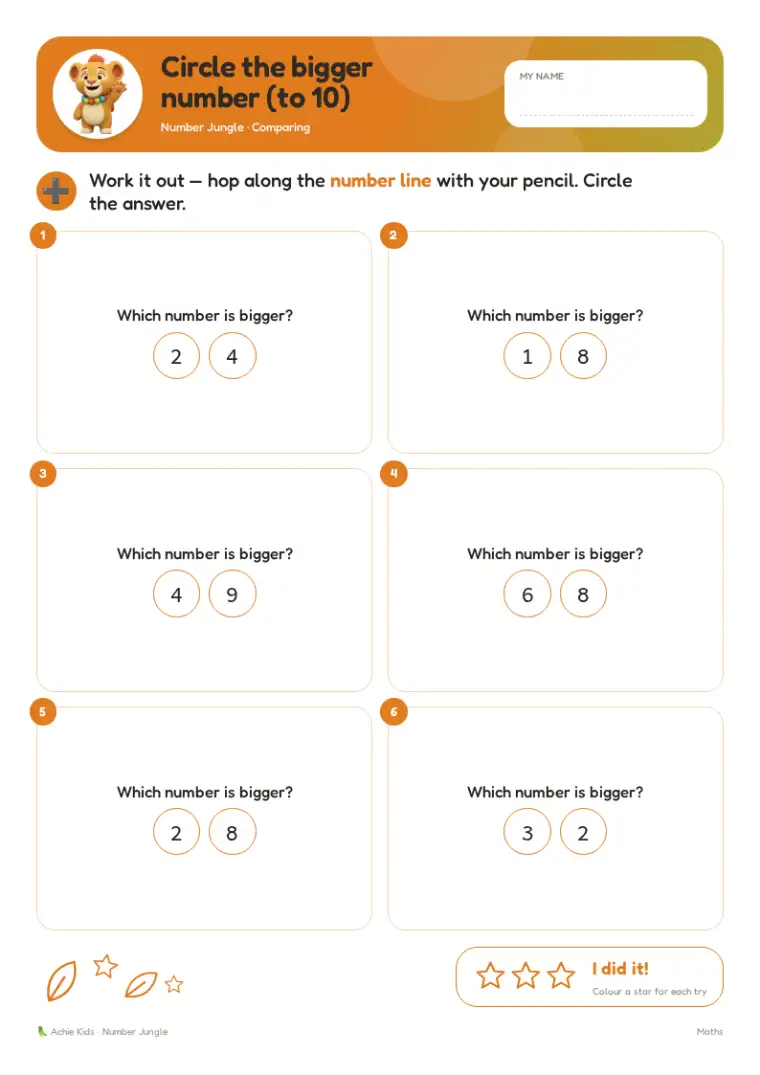
Six pairs of numbers up to 10: circle the bigger number in each pair. Saying “4 is bigger than 2” out loud helps it stick.
Ages 4–5 · 2 pages · colour + ink-saver
Maths
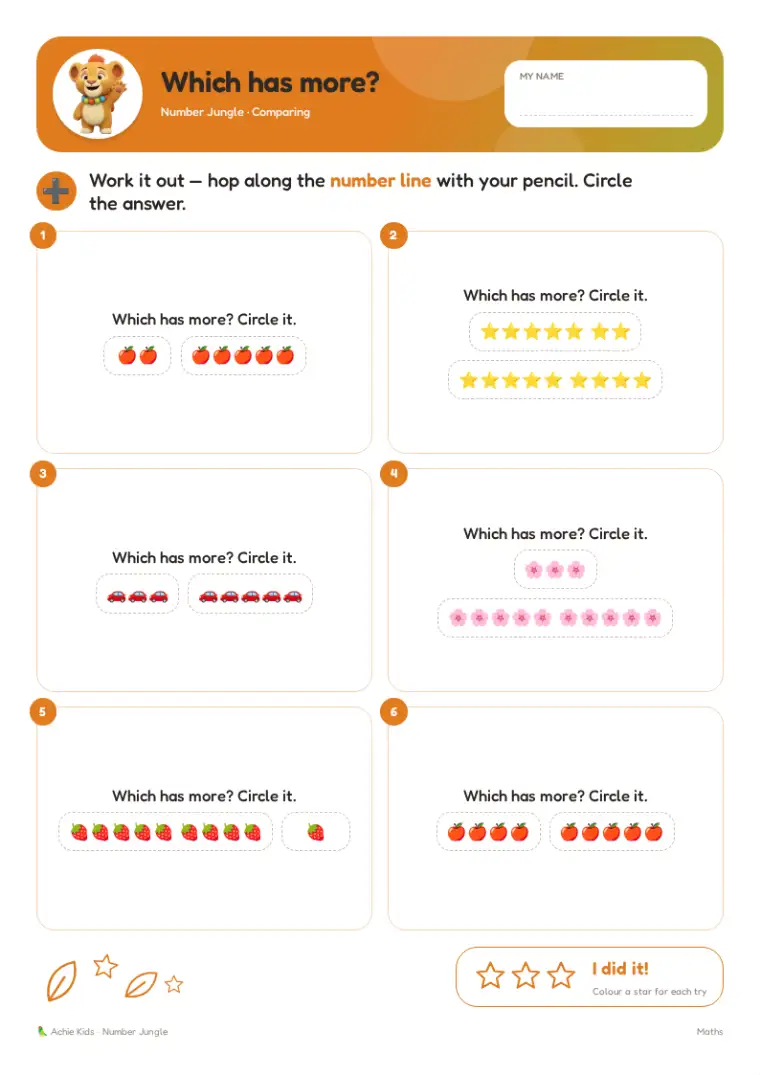
Six pairs of groups to compare: count each group, then circle the one with more. Comparing amounts builds the meaning behind bigger and smaller numbers.
Ages 4–5 · 2 pages · colour + ink-saver
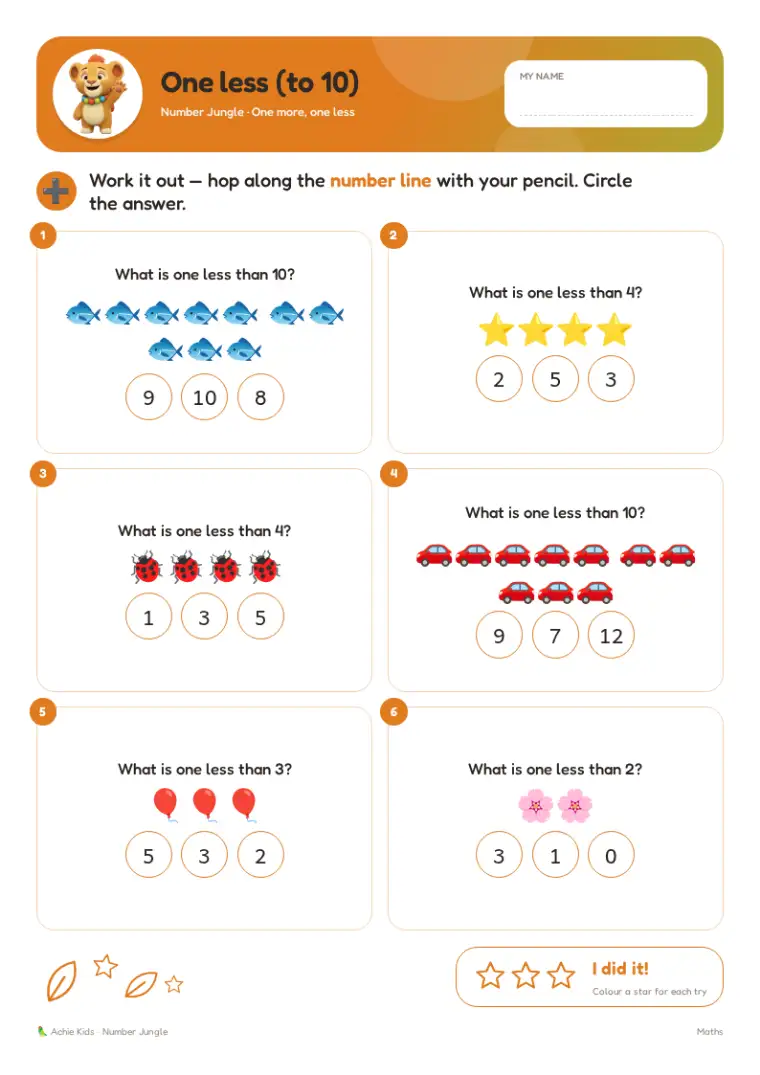
Maths
Six questions like “What is one less than 10?” and “What is one less than 4?” with pictures to count. Finding one more and one less is the start of adding and taking away.
Ages 4–5 · 2 pages · colour + ink-saver
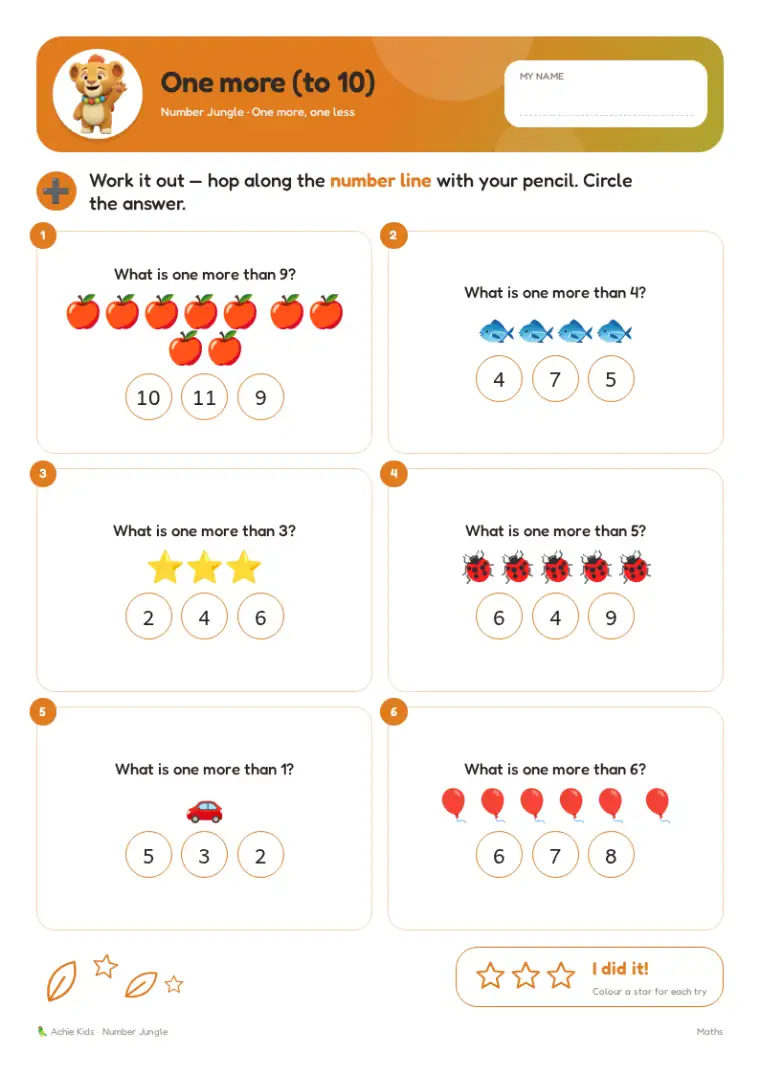
Maths
Six questions like “What is one more than 9?” and “What is one more than 4?” with pictures to count. Finding one more and one less is the start of adding and taking away.
Ages 4–5 · 2 pages · colour + ink-saver
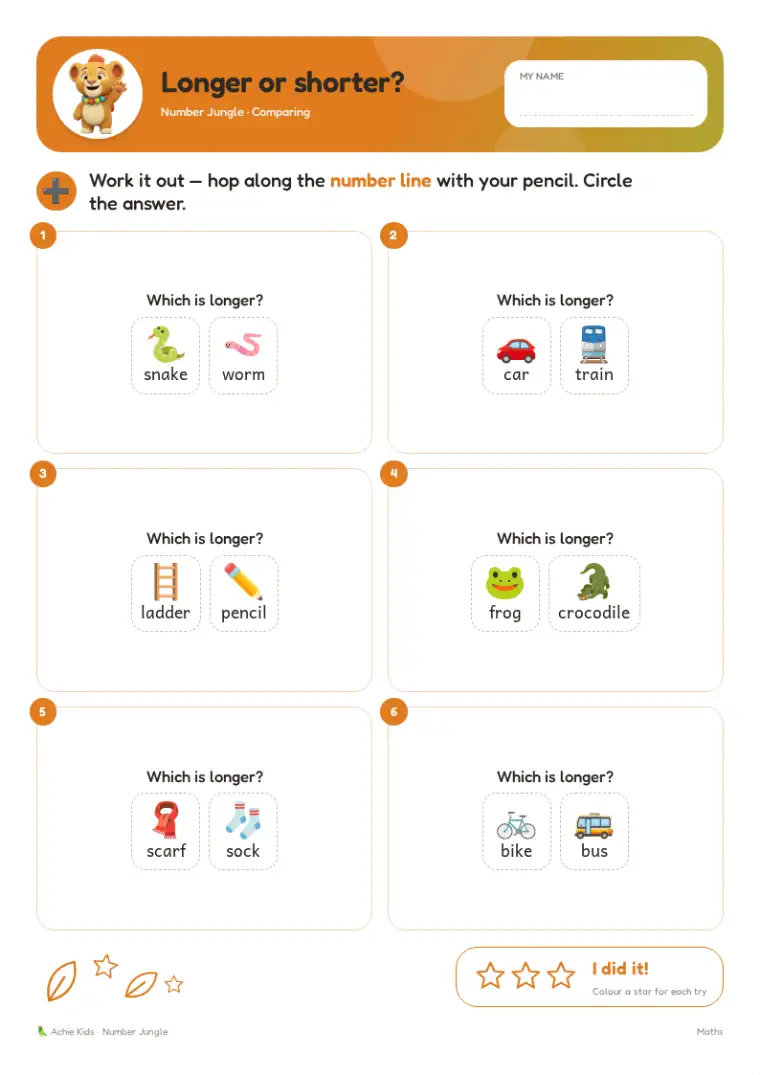 Free
Maths
Six pairs to compare — snake or worm, train or car and ladder or pencil… Which is longer? Circle it. Comparing before measuring builds the words children need: longer, taller, heavier, holds more.
Ages 3–5 · 2 pages · colour + ink-saver