 Free
Feelings
More feelings faces
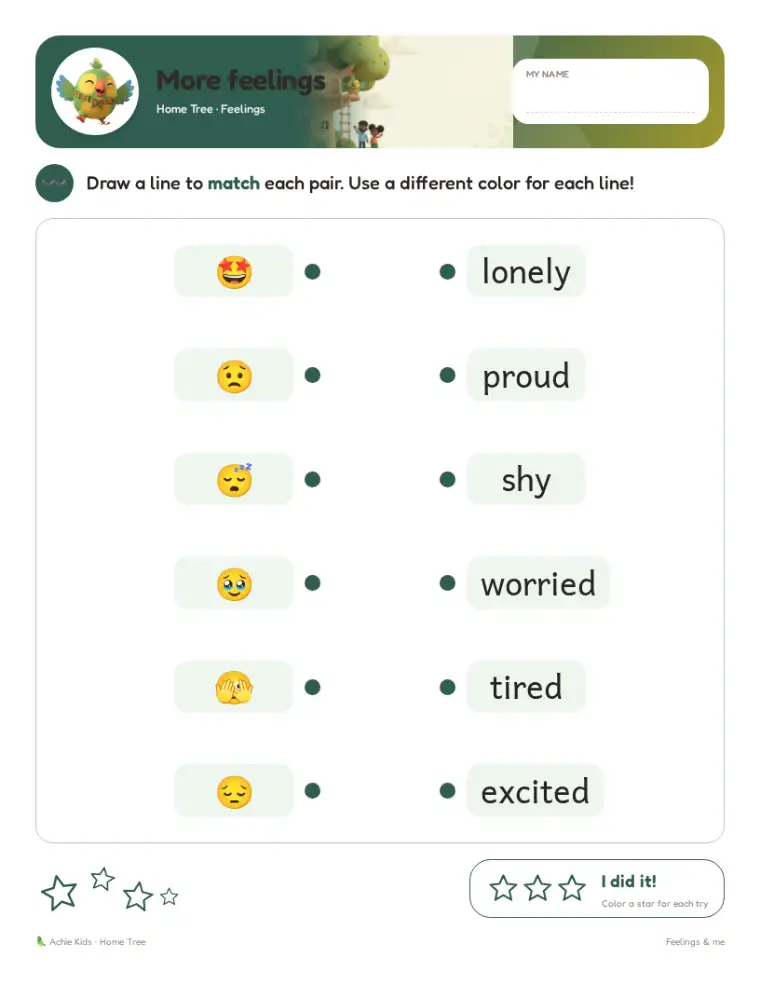
Six more feelings to match and talk about: excited, worried, tired, proud, shy and lonely. Bigger feelings words give children more ways to say what is going on inside.
Ages 4–7 · 2 pages · color + ink-saver
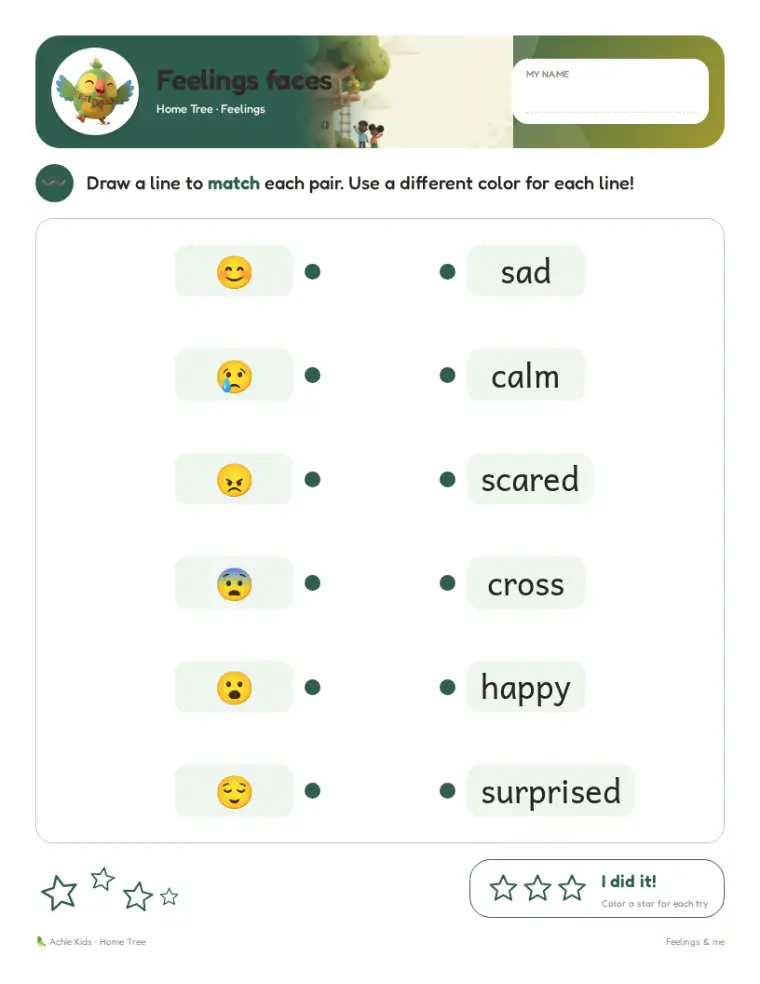
Match six feelings faces to their words — happy, sad, angry, scared, surprised and calm — then make each face in a mirror together. Naming feelings is the first step to managing them.
Free, no account needed. Also: A4 · ink-saver · without the answer page
CASEL framework
Self-awareness: identifying emotions
CASEL framework
Self-management: managing emotions
FreeFeelings
Six more feelings to match and talk about: excited, worried, tired, proud, shy and lonely. Bigger feelings words give children more ways to say what is going on inside.
Ages 4–7 · 2 pages · color + ink-saver
Feelings
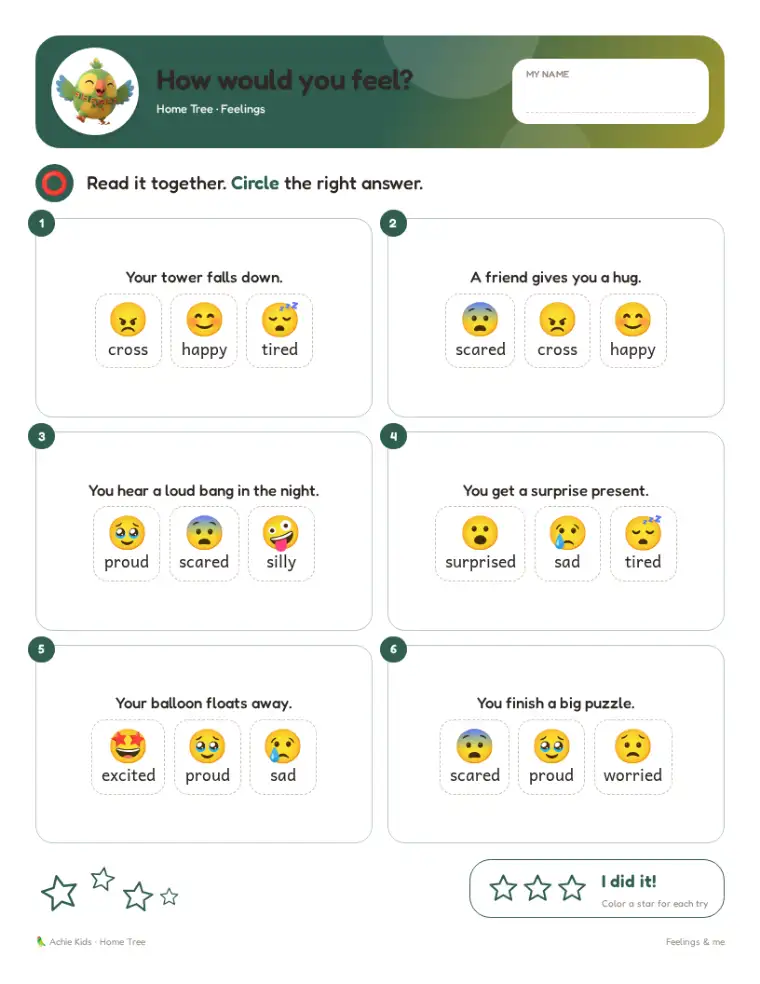
Six little moments — “Your tower falls down.” “A friend gives you a hug.” — and three feelings faces for each. Circle how someone might feel, then talk about it: people can feel different things about the same moment, and that is OK.
Ages 4–5 · 2 pages · color + ink-saver
Feelings
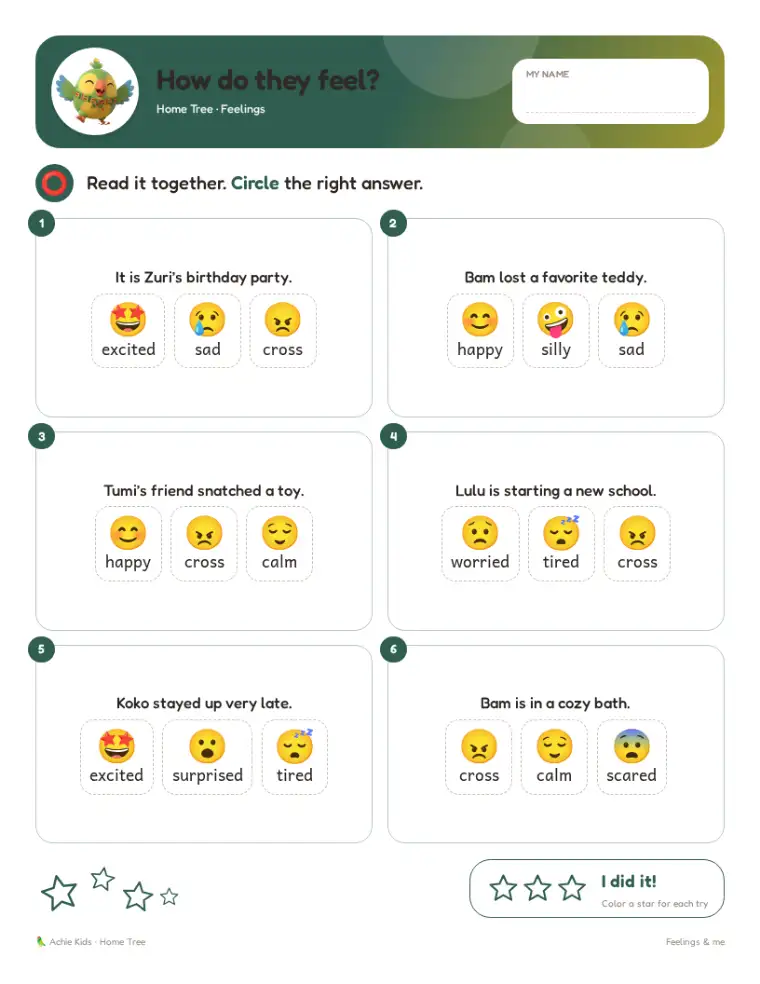
Six little moments — “It is Zuri’s birthday party.” “Bam lost a favorite teddy.” — and three feelings faces for each. Circle how someone might feel, then talk about it: people can feel different things about the same moment, and that is OK.
Ages 4–5 · 2 pages · color + ink-saver
Feelings
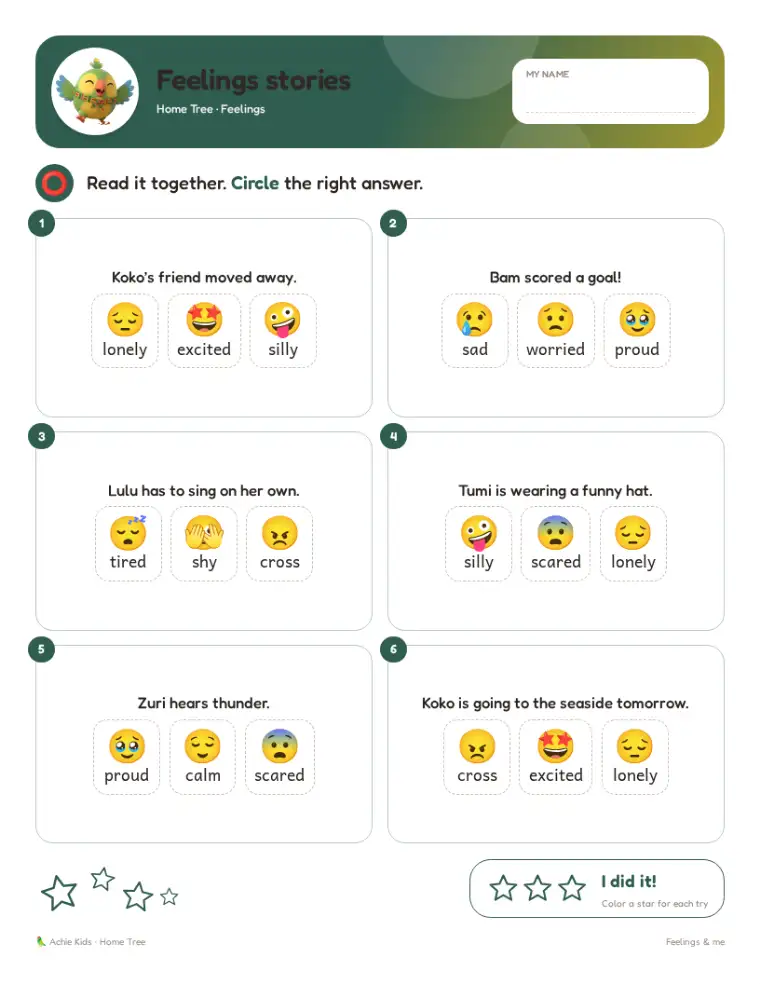
Six little moments — “Koko’s friend moved away.” “Bam scored a goal!” — and three feelings faces for each. Circle how someone might feel, then talk about it: people can feel different things about the same moment, and that is OK.
Ages 5–6 · 2 pages · color + ink-saver
Feelings
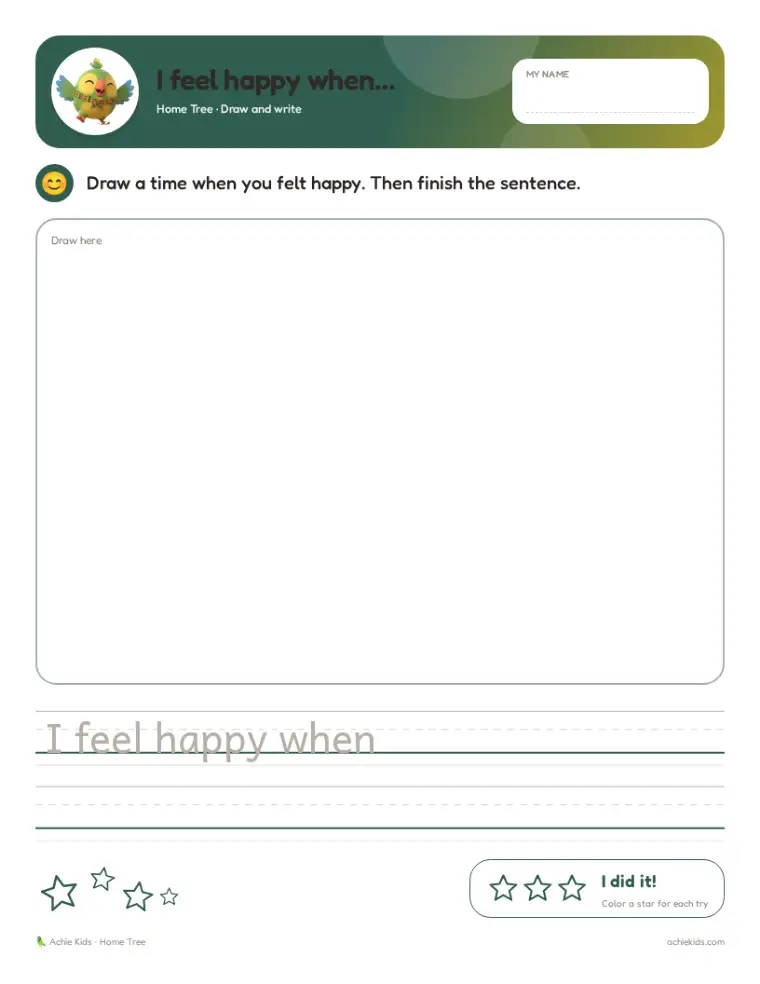
What makes your child happy? Draw it and finish the sentence “I feel happy when…”. A lovely page to keep and look back on.
Ages 4–7 · 1 page · color + ink-saver
Feelings
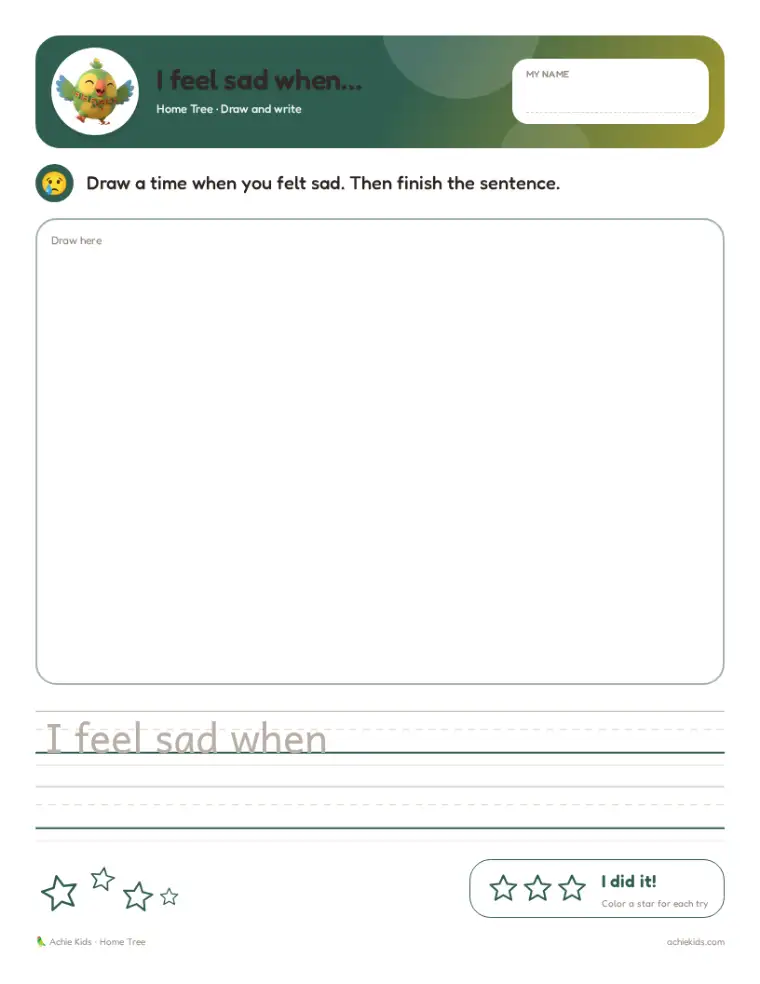
Draw a time you felt sad, and what helped you feel better. Talking about sad feelings in a calm moment makes them easier to share when they happen.
Ages 4–7 · 1 page · color + ink-saver