Feelings
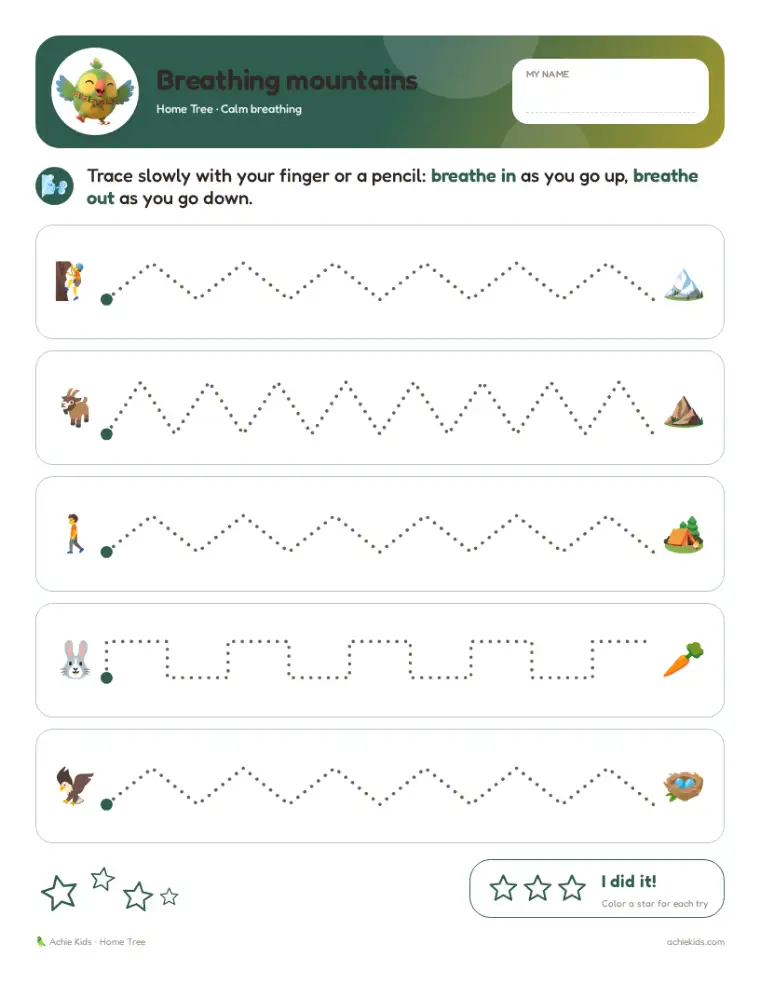
Calm breathing: mountains
Climb the mountains with a finger: breathe in all the way up, breathe out all the way down. Zigzag peaks for slow, steady breaths when feelings get big.
Ages 3–7 · 1 page · color + ink-saver
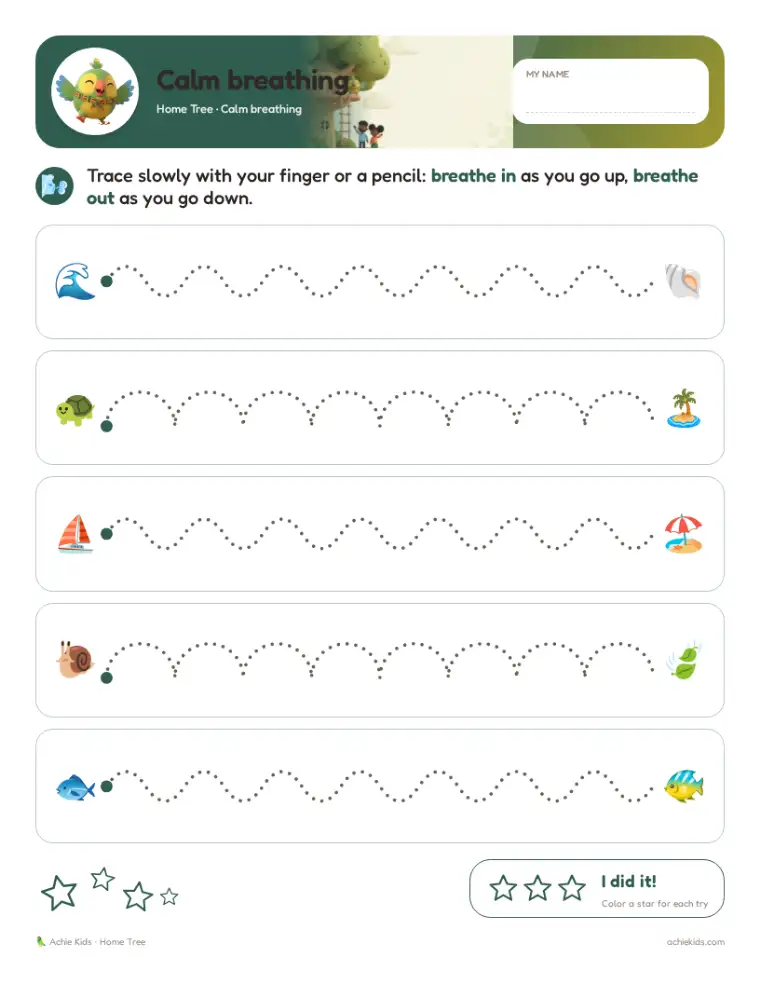
Trace the waves slowly with a finger: breathe in as you go up the wave, breathe out as you go down. Five rows of gentle waves and bumps to calm busy bodies — and practice pencil control too.
CASEL framework
Self-management: managing emotions
Feelings
Climb the mountains with a finger: breathe in all the way up, breathe out all the way down. Zigzag peaks for slow, steady breaths when feelings get big.
Ages 3–7 · 1 page · color + ink-saver

Feelings
Five calm-down steps with pictures — stop, breathe, squeeze, a cuddle or a drink, talk to a grown-up — to tick off when feelings get big. Put it on the fridge and practice it on a good day.
Ages 3–7 · 1 page · color + ink-saver
Feelings
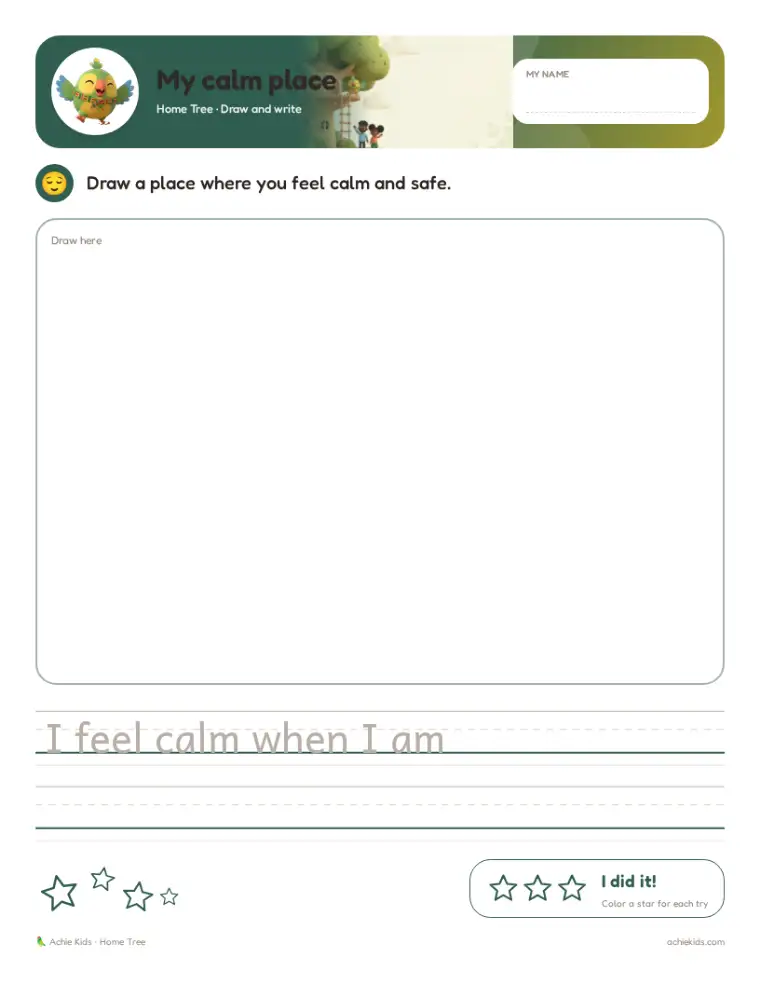
Draw a place where you feel calm and safe — a cozy bed, a beach, a den — real or imagined. Thinking of a calm place is a simple trick children can use anywhere.
Ages 4–7 · 1 page · color + ink-saver
Feelings
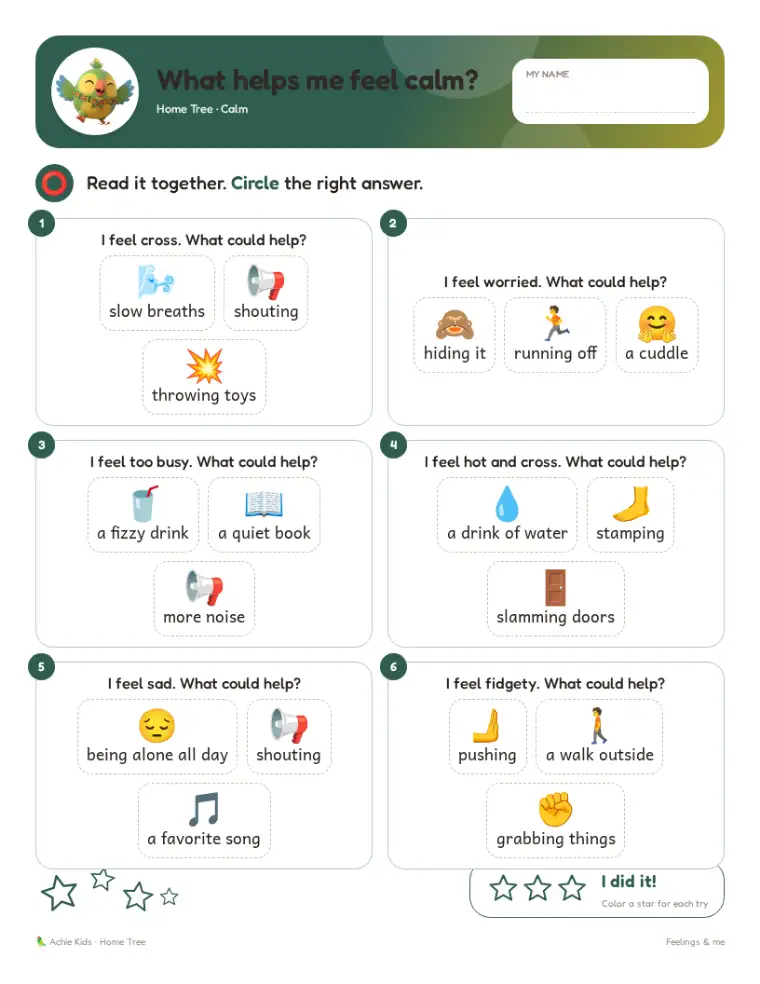
Six calm-down ideas to try — slow breaths, a cuddle, a quiet book, a drink of water, a song, a walk — with a question for each. Circle the calm choice and find the ones that work for your child.
Ages 4–7 · 2 pages · color + ink-saver
 Free
Feelings
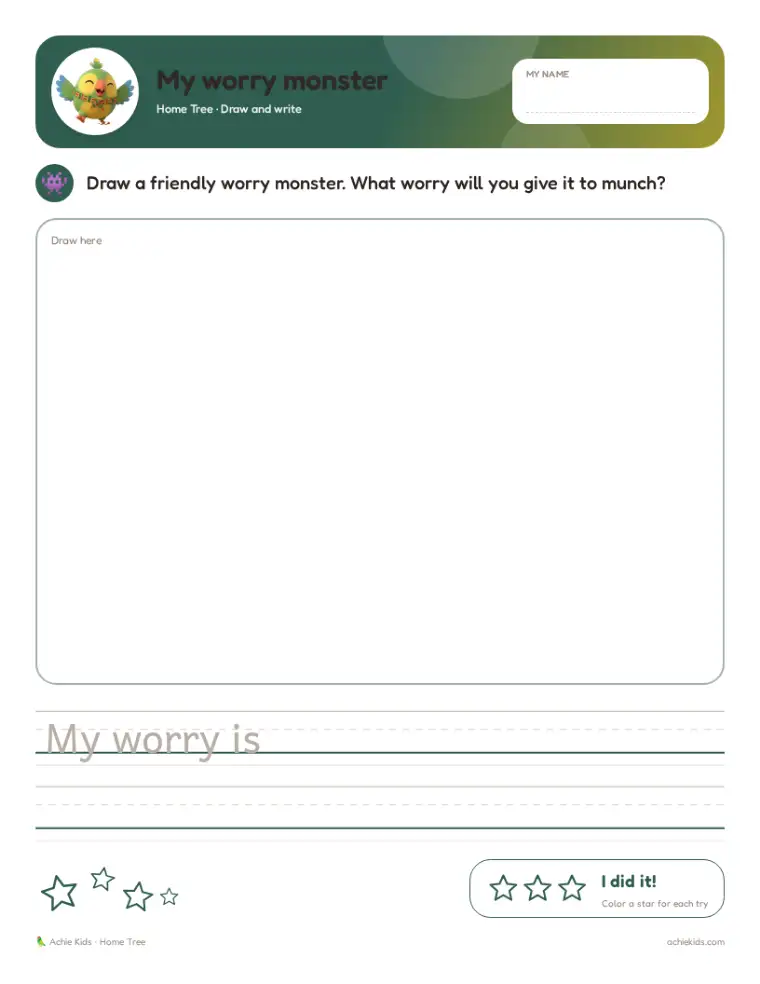
Draw a friendly worry monster and write or draw a worry to “feed” it. Getting a worry out of your head and onto paper makes it smaller — and easier to talk about with a grown-up.
Ages 4–7 · 1 page · color + ink-saver
 Free
Feelings
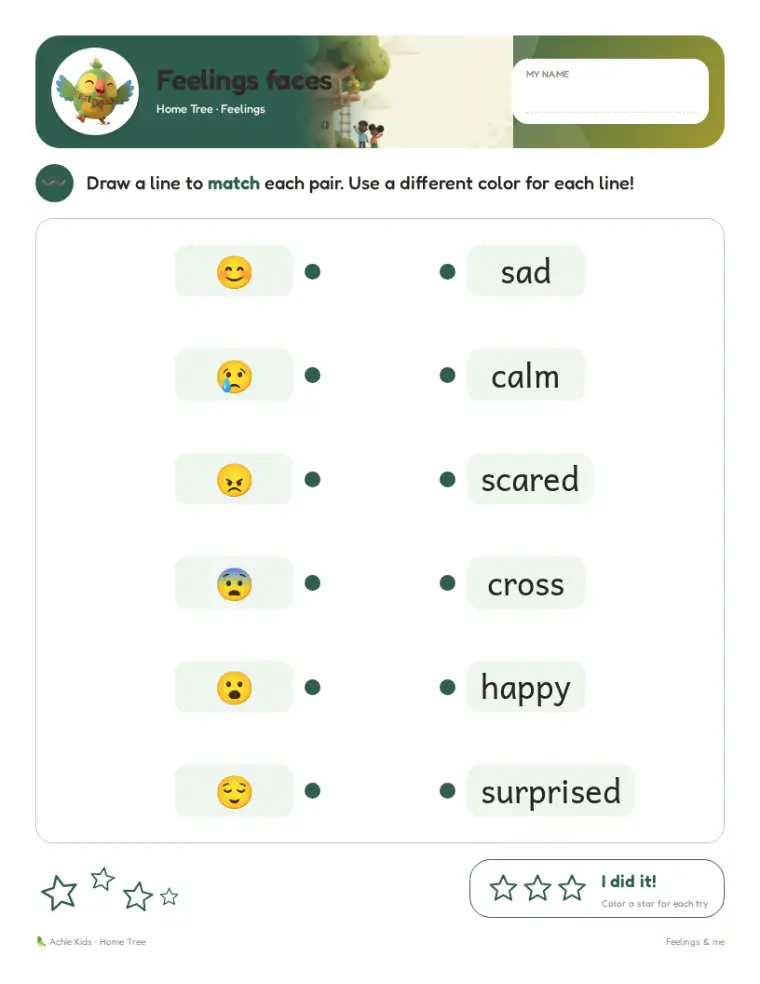
Match six feelings faces to their words — happy, sad, angry, scared, surprised and calm — then make each face in a mirror together. Naming feelings is the first step to managing them.
Ages 3–5 · 2 pages · color + ink-saver